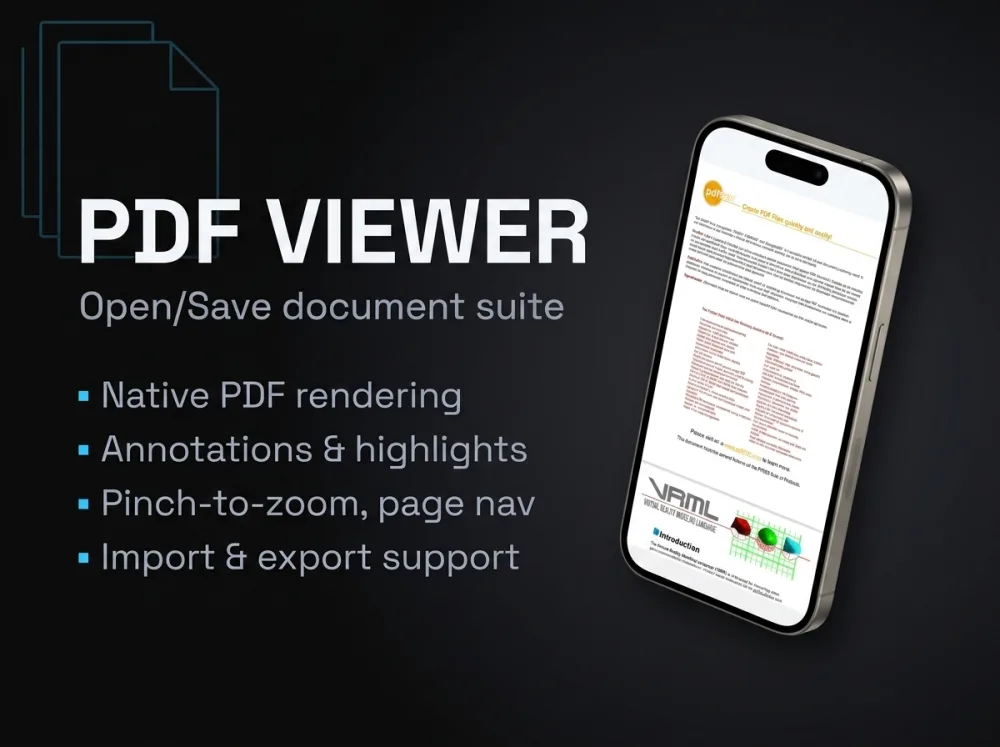
PDF Viewer as a free template. The free PDF viewer (live since May 2025) shows 1.8K downloads (about 1,800) and four positive reviews on the Marketplace, checked October 1, 2026. That volume established credibility and gave paid templates a place to point back to. Free-then-paid is a deliberate marketplace strategy, not an accident.
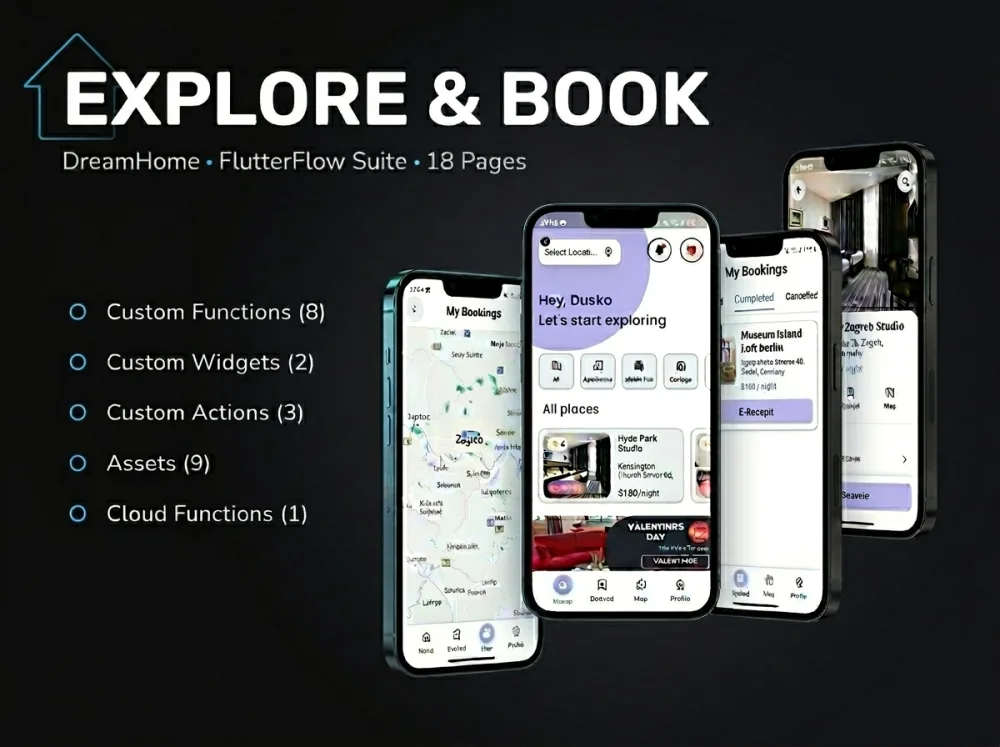
Dream Home — full-app real-estate template. Multi-page listing browser, property detail screens, favorites, search filters, scaffold-ready for any backend. Priced at $75. The public Marketplace label is “10+ sales”, checked October 1, 2026; it does not disclose the exact count.
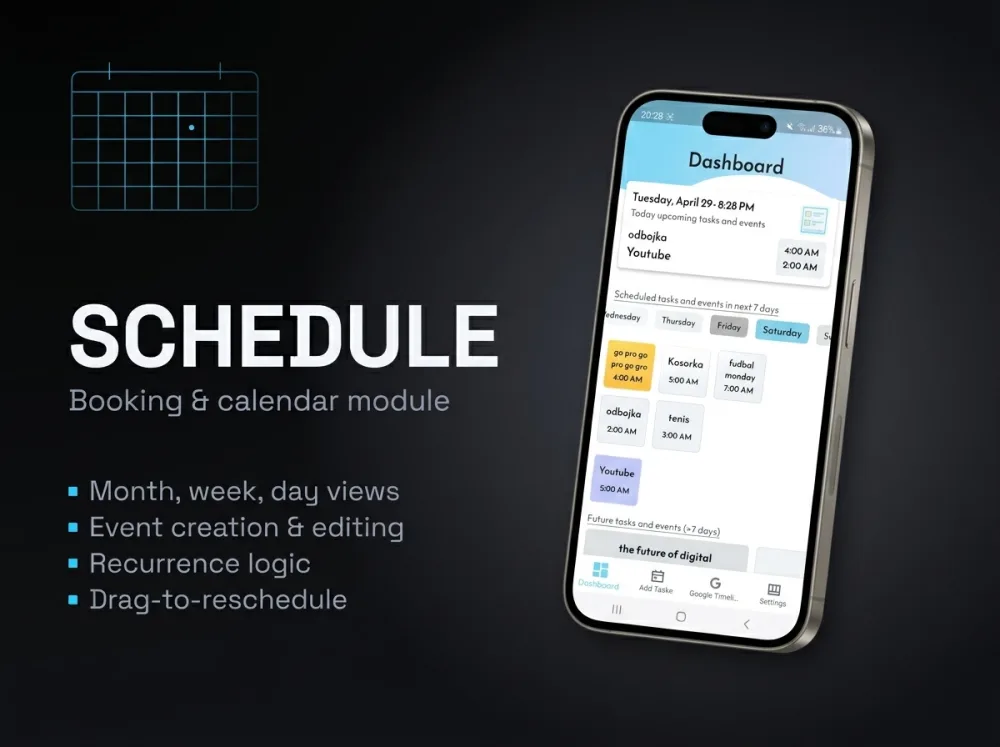
Schedule — full-app calendar and appointments template. Multi-view calendar, event CRUD, appointment management. Priced at $50. Listed as Advanced Calendar Template: Tasks & Google Events, with a public “10+ sales” label as of October 1, 2026.
Second batch built around thematic clusters. Five templates submitted in one batch in April 2026:
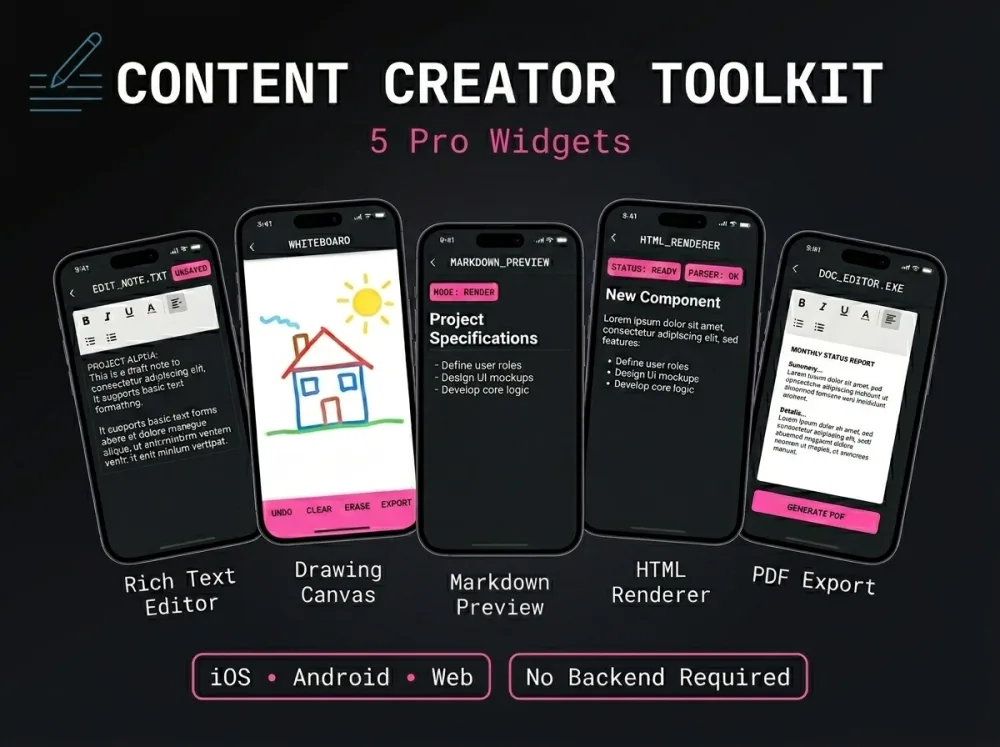
- Content Creator Toolkit — five widgets for blog, notes, CMS, and education apps: Quill rich text editor (Delta JSON output), drawing canvas, markdown renderer, HTML renderer, Fleather editor with PDF export.
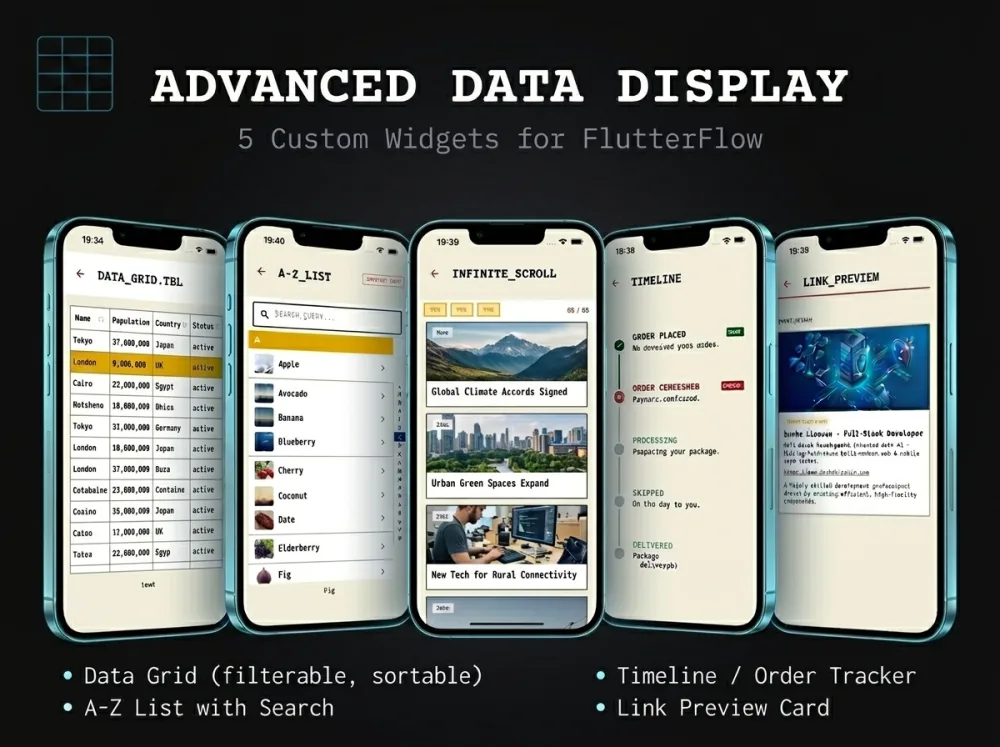
- Advanced Data Display — five widgets for data-heavy apps: data grid, AZ list view, infinite scroll list, delivery timeline, link preview.
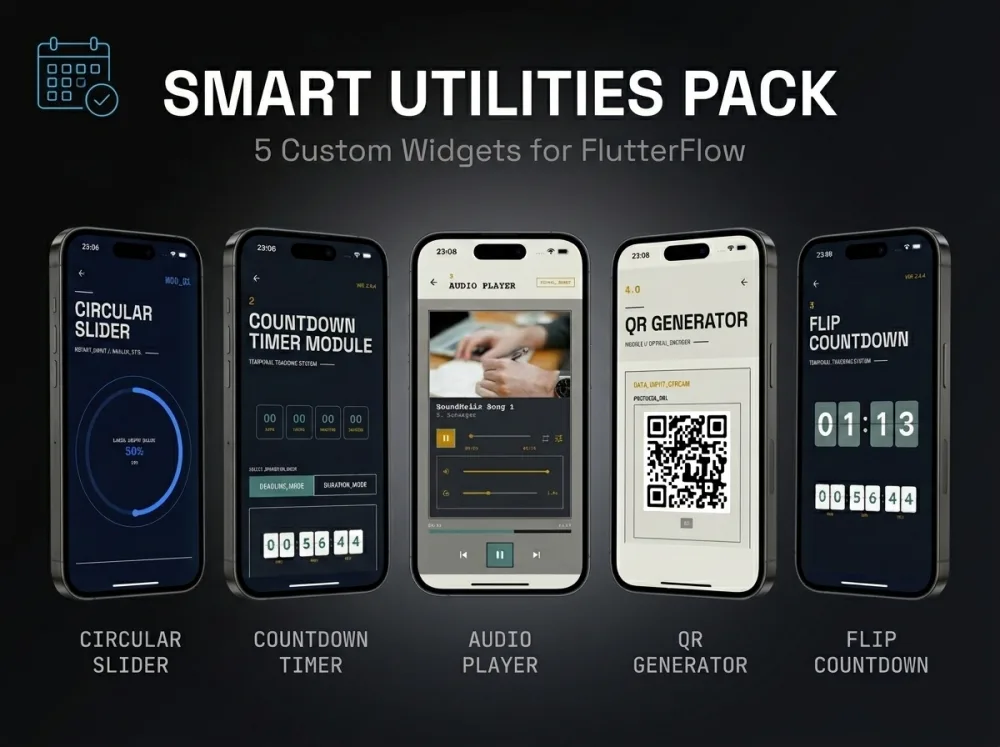
- Smart Utilities — five interactive utility widgets: circular slider, countdown timer, audio player, QR code generator, flip countdown.
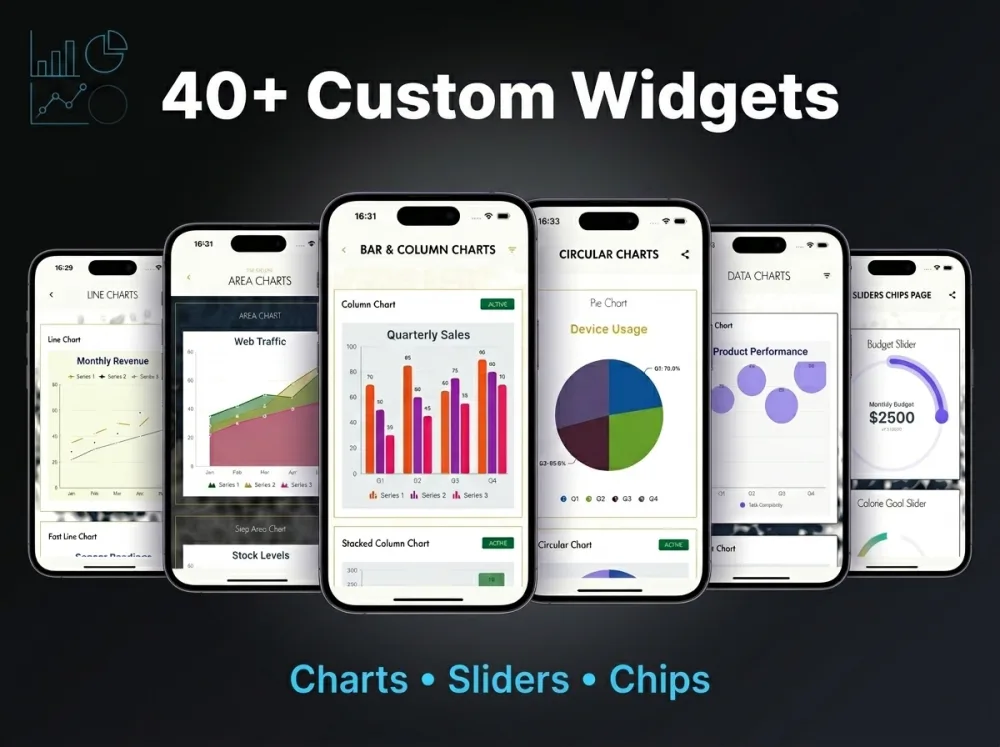
- Charts & Data Viz — 14 chart widgets plus 5 chip/input widgets. Line, column, pie, bubble, scatter, waterfall, radial bar, fast line, plus stacked-area, stacked-bar, stacked-column, stacked-line, and their 100%-normalized variants. Industry-comparable breadth to dedicated chart libraries.
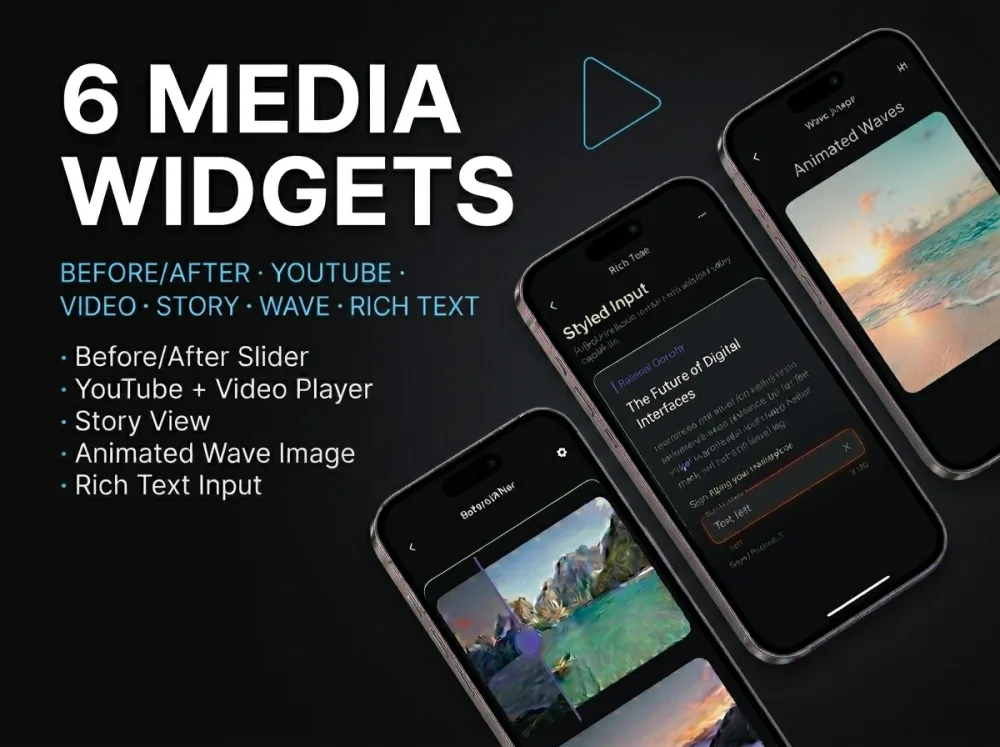
- Media & Image Widgets — eight visual widgets: before/after comparison, custom text, custom YouTube player, noodle image viewer, interactive pic viewer (pan/zoom), Instagram-style story view, video player screen, wave image.
Full submission pipeline ownership. Every template shipped with its instructions, marketplace imagery, iOS screenshots, cover, thumbnail, and tested widget code. No deferred polish — each submission ready-to-list on first review.